
Giant sequoia
 2
2 7
7Will it grow where I live?
Giant sequoia is hardy to zone 7: lowlands, river valleys and cities across Central Europe are fine, harsher continental or upland sites need winter protection or a container.
Or check it for your location right here:
Profile
- Family
- Cupressaceae
- Habit
- Tree
- Height
- 90 m
- Spread
- 20 m
- Growth
- very fast
- Lifespan
- 3000 years
- First yield
- after 20 years
- Hardiness
- zone 7–8
- Shade tolerance
- partial shade
- Soil
- Sand, Silt, Loam
- Soil moisture
- dry – very wet
- pH
- 5.5 – 7.5
- Synonyms
- Bergmammutbaum
Flowering & harvest
| J | F | M | A | M | J | J | A | S | O | N | D | |
|---|---|---|---|---|---|---|---|---|---|---|---|---|
| Flowering | ||||||||||||
| Fruit harvest |
Uses
Other uses: Wood is coarse-grained, very light, soft, very durable, and rather brittle. It is used for shingles, building materials, fence posts, etc.
Growing
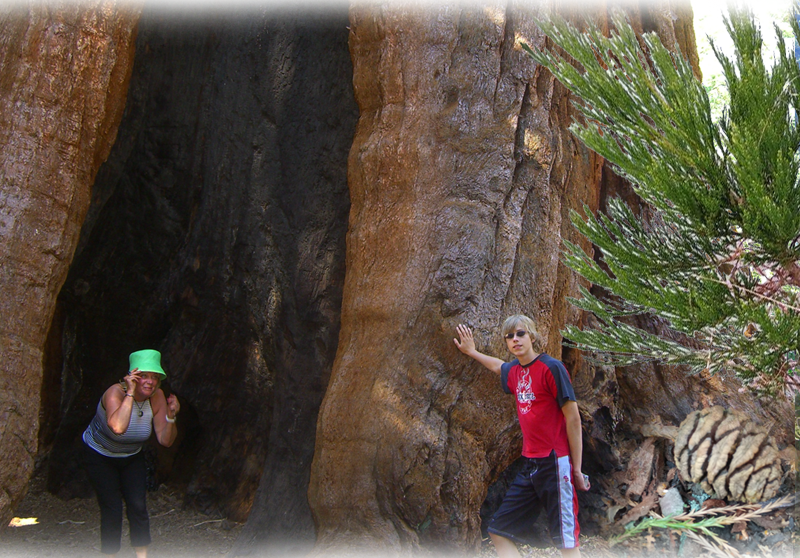
A tree that is easy to cultivate and grows rapidly, thriving in deep, fertile soil and a sunny, sheltered location. It can adapt well to various soil types, locations, and climates, including hot and arid areas. Young trees can handle light shade, but mature plants do not tolerate shade well. This tree is resistant to drought and intolerant to air pollution. This species is the largest tree in the world in terms of weight, reaching up to 2,000 tons, although not the tallest. In its natural habitat, it has an impressive lifespan, with some specimens living up to 3,500 years. It exhibits relatively fast height growth, averaging 60 cm annually for the first 50 years or more. The girth can also expand significantly, with an average annual growth of 7-10 cm. These trees are known for their longevity. It is recommended to plant the tree in its permanent location when it is between 30-50 cm tall. These trees are vulnerable to honey fungus. The foliage is tough and coarse to the touch, giving off a subtle scent reminiscent of anise. The cones take two years to mature, and in their natural environment, they can remain on the tree with viable seeds for up to 30 years. The cones open after the heat from a forest fire.
Propagation
Sow the seeds early in spring in a cool environment with partial shade. Alternatively, sow the seeds in a greenhouse right after they mature. Germination rates are usually low, but a two-month cold stratification can be beneficial. Once the seedlings are big enough, transfer them to individual pots and keep them in a cool environment during the first winter. Later, in late spring or early summer, plant them in their final spot. Initially, the plants will require protection from cold and spring frosts for the first couple of years when grown outdoors. If there are enough seeds, they can be sown outdoors in a lightly shaded area by the end of March. Let them grow in the bed for two years before relocating them to their permanent spot either in late autumn or spring.
Notable
Special features: established, drought and fire resistant, sensitive to pollution; likes 450-1500mm rainfall/year and dry summers and snowy winters; nevertheless, there should be enough water in the deep, fertile soil in summer (near a stream without waterlogging); mature cones hang on the tree for up to 30 years before opening after a forest fire; needs forest fire for seed ripening; can suffer from snow breakage in heavy snowfall and from frost heave in the absence of snow.
Origin & habitat
Southwestern North America - California.
Grows individually or in small clusters in damp to marshy ground, typically in shaded woodlands, ranging from sea level to 1350 meters.
Frequently asked questions
Giant sequoia: how big does it get?
Giant sequoia (Sequoiadendron giganteum) grows as a Tree and reaches roughly 90 m in height when mature, with a spread of about 20 m. Growth is very fast.
Giant sequoia: what site does it need?
Giant sequoia tolerates partial shade. Suitable soils are Sand, Silt, Loam. Soil moisture should be in the range dry – very wet. The pH may lie between 5.5 and 7.5.
Giant sequoia: is it hardy?
Giant sequoia is listed as hardy in zone 7–8 and survives normal winters outdoors there.
Giant sequoia: will it grow in Central Europe?
Giant sequoia is hardy to zone 7: lowlands, river valleys and cities across Central Europe are fine, harsher continental or upland sites need winter protection or a container.
Giant sequoia: when does it flower?
In a temperate northern-hemisphere climate it flowers in April.
Giant sequoia: when is it harvested?
In a temperate northern-hemisphere climate the fruit ripens in June.
Giant sequoia: is it poisonous?
No toxicity is recorded for Giant sequoia. With wild plants, never rely on a database alone — only on a confident identification.
Giant sequoia: what is it used for?
Rated on a scale up to 10: Edible 2/10, Other uses 7/10.
Plan this plant into your own garden
Permaplans plans your garden to scale on the map — with a site check, harvest calendar and over 1,000 plants. Free for iPhone, Android, Mac, Windows & Linux.
Will this plant grow where you live? → Check your site
Community experience
No first-hand reports for this plant yet.
Growing it? Write in the app what works for you – your post will show up here.
💬 Get the app and join in