
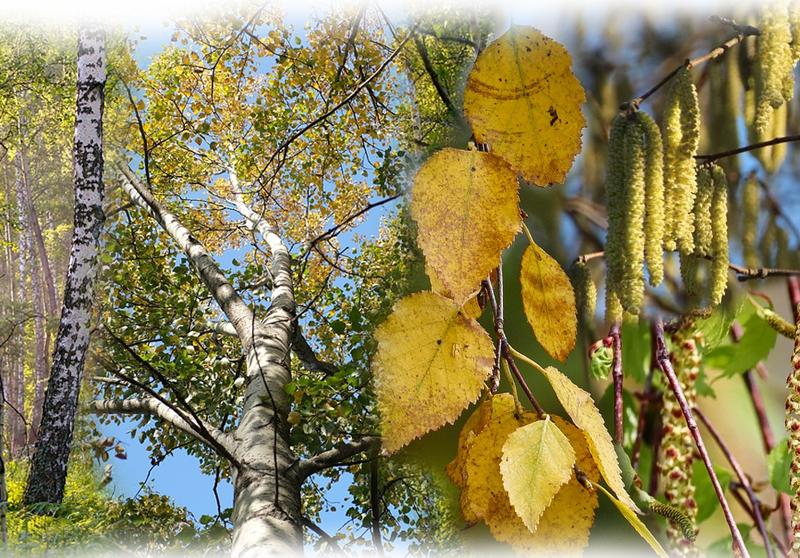
Silver birch
 6
6 7
7 9
9Will it grow where I live?
Silver birch is hardy to zone 2 – that covers all of Central Europe and the British Isles, and every USDA zone from 2 upwards.
Or check it for your location right here:
Profile
- Family
- Betulaceae
- Habit
- Tree
- Height
- 23 m
- Spread
- 12 m
- Growth
- very fast
- Lifespan
- 110 years
- First yield
- after 10 years
- Hardiness
- zone 2–7
- Shade tolerance
- full sun
- Soil
- Sand, Silt, Loam, Clay
- Soil moisture
- dry – very moist
- pH
- 5.5 – 7.5
- Synonyms
- Birke
Flowering & harvest
| J | F | M | A | M | J | J | A | S | O | N | D | |
|---|---|---|---|---|---|---|---|---|---|---|---|---|
| Flowering | ||||||||||||
| Fruit harvest | ||||||||||||
| Leaf harvest |
Uses
Edible: Inner bark can be boiled or dried and ground into a meal, used as a thickener in soups, or mixed with flour for making bread and biscuits. It is typically considered a food source during times of scarcity when other starch sources are limited. Birch sap, with a sweet taste, can be consumed raw or cooked. Harvested in early spring by tapping the trunk before the leaves emerge, it can be boiled down into syrup. Tapping mature trees can yield between 4 and 7 liters of sap per day without causing harm, as long as the tap is replenished. However, excessive tapping may lead to the tree's demise. The best sap flow occurs on sunny days following a frost. Additionally, the sap can be fermented to produce beer. Young birch leaves are edible either raw or cooked, and teas can be made from both the leaves and the essential oil found in the inner bark.
Medicinal: Berberine, discovered in the rhizomes of Berberis species, possesses strong antibacterial effects. It is administered orally for treating different intestinal infections, especially bacterial dysentery, due to its low absorption rate in the body. Caution is advised against combining it with Glycyrrhiza species (licorice) to prevent potential reduction in berberine's effectiveness. Additionally, berberine has demonstrated anti-tumor properties.
Other uses: The bark of the birch tree is utilized for creating various items such as drinking vessels, canoe skins, roof tiles, and more due to its waterproof, durable, tough, and resinous qualities. It can be harvested without harming the tree, with the best time for removal being late spring to early summer. Birch trees are pioneer species that easily colonize cleared or burned areas, preparing the ground for the growth of other forest trees. The white bark produces a tarry oil with fungicidal properties in spring, serving as an insect repellent and shoe polish. An essential oil derived from the bark, known as "Russian Leather," was once used as a perfume. The inner bark decoction is employed for preserving cordage and contains up to 16% tannin. The oil extracted from the inner bark, similar to wintergreen oil, has medicinal applications. Resin glands are utilized in making hair lotions. The inner bark also yields a brown dye and can be used for making glue, rope, and as a substitute for oiled paper. Young flexible twigs find use in creating whisks, brooms, thatching, and weaving. Birch leaves are beneficial additions to compost. Birch wood, being soft, lightweight, and durable, is employed in crafting furniture, tool handles, toys, carvings, charcoal, paper, and various other goods.
Growing
Site: Full sun, otherwise undemanding. What matters is what birch does to its surroundings: its shallow, far-reaching roots draw water away from beds and lawn, it seeds itself prolifically across the whole garden, and its April pollen is the commonest tree allergen — not beside a bedroom window or seating. Against that stands its ecological weight: with 163 caterpillar species it is a keystone tree and draws birds accordingly. The open crown lets through enough light for underplanting. Care: Ideally do not prune at all, and if you must, then in summer — in late winter it bleeds heavily from every wound. Feeding is pointless; it comes from raw ground. Young plants are badly at risk from browsing: deer and hares take shoots and bark, so a wire guard for the first few years is essential. Water only while establishing, after which it manages alone — though it suffers increasingly from urban heat and then does need help in drought summers.
Propagation
Birch reproduces almost entirely from seed, and does so prodigiously: a single catkin produces around 450 nutlets, light enough for the wind to carry them for kilometres. The seed ripens in high summer and germinates the following spring provided there is enough moisture. Being a light germinator it must not be covered with soil — it needs open mineral ground free of leaf litter and competition, precisely the conditions that make the species a pioneer. When sowing deliberately, press the seed down only lightly and keep the surface evenly moist. Little can be done vegetatively: silver birch does not coppice, cuttings root poorly, and cultivars are therefore grafted.
Value for wildlife
Silver birch is one of the load-bearing species of our insect fauna: 163 moth and butterfly species use it as a larval food plant, 34 of them exclusively or predominantly — from the peppered moth to the Camberwell beauty — and 12 beetle species live on its leaves, bark and wood. Its flowers are wind-pollinated and unrewarding for bees; only three mining bee species gather appreciable pollen from the catkins. The ecological weight therefore lies with caterpillars and the bird broods that depend on them. The small seeds are winter food for redpolls and siskins, and 24 bird species in all have been recorded on birch. As a light-demanding pioneer it colonises bare ground and wasteland quickly.
Notable
Special features: prefers cleared/burned (acidic-sandy) land> forest structure; removal of the resinous outer bark (late spring - early summer) does not kill the tree; 4 - 7 liters/day/tree tap hole, stop after that; yield best on sunny days after a frost; <4.4% of the dt forest, +firewood: 1900kWh/rm, 4.3kWh/kg;
Origin & habitat
Europe to western Siberia, the Caucasus and northern Persia. Silver birch occurs throughout Europe and is absent only from the far north of Scandinavia. Eastwards its range extends to the Yenisei and the Altai mountains, south-east across the Caucasus to northern Persia; to the south-west it reaches Morocco. In the southern Alps it climbs to 1,900 m. After the last ice age, from around 13,000 BC, it was among the first trees to reforest central and northern Europe, and was later pushed back to marginal ground by pine, hazel and oak. In North America it has been introduced in many places.
Silver birch is the foremost pioneer tree of Central Europe: it is the first to colonise fallow land, rubble and clear-felled ground, quarries, roadsides and heaths. It is undemanding as to soil but, because of competition from other trees, grows mostly on acid, sandy to loamy ground; it avoids pure limestone soils and occurs on gypsum. As a decidedly light-demanding tree it tolerates no shading and disappears again once shade-casting species establish. Dry sites suit it, while young plants need a good deal of water. On permanently waterlogged ground it gives way to downy birch. It avoids heat and is well adapted to short growing seasons.
Frequently asked questions
Silver birch: how big does it get?
Silver birch (Betula pendula) grows as a Tree and reaches roughly 23 m in height when mature, with a spread of about 12 m. Growth is very fast.
Silver birch: what site does it need?
Silver birch tolerates full sun. Suitable soils are Sand, Silt, Loam, Clay. Soil moisture should be in the range dry – very moist. The pH may lie between 5.5 and 7.5.
Silver birch: is it hardy?
Silver birch is listed as hardy in zone 2–7 and survives normal winters outdoors there.
Silver birch: will it grow in Central Europe?
Silver birch is hardy to zone 2 – that covers all of Central Europe and the British Isles, and every USDA zone from 2 upwards.
Silver birch: when does it flower?
In a temperate northern-hemisphere climate it flowers in April.
Silver birch: when is it harvested?
In a temperate northern-hemisphere climate the fruit ripens from July to August.
Silver birch: is it poisonous?
No toxicity is recorded for Silver birch. With wild plants, never rely on a database alone — only on a confident identification.
Silver birch: what is it used for?
Rated on a scale up to 10: Edible 6/10, Medicinal 7/10, Other uses 9/10.
Plan this plant into your own garden
Permaplans plans your garden to scale on the map — with a site check, harvest calendar and over 1,000 plants. Free for iPhone, Android, Mac, Windows & Linux.
Will this plant grow where you live? → Check your site
Community experience
No first-hand reports for this plant yet.
Growing it? Write in the app what works for you – your post will show up here.
💬 Get the app and join in