
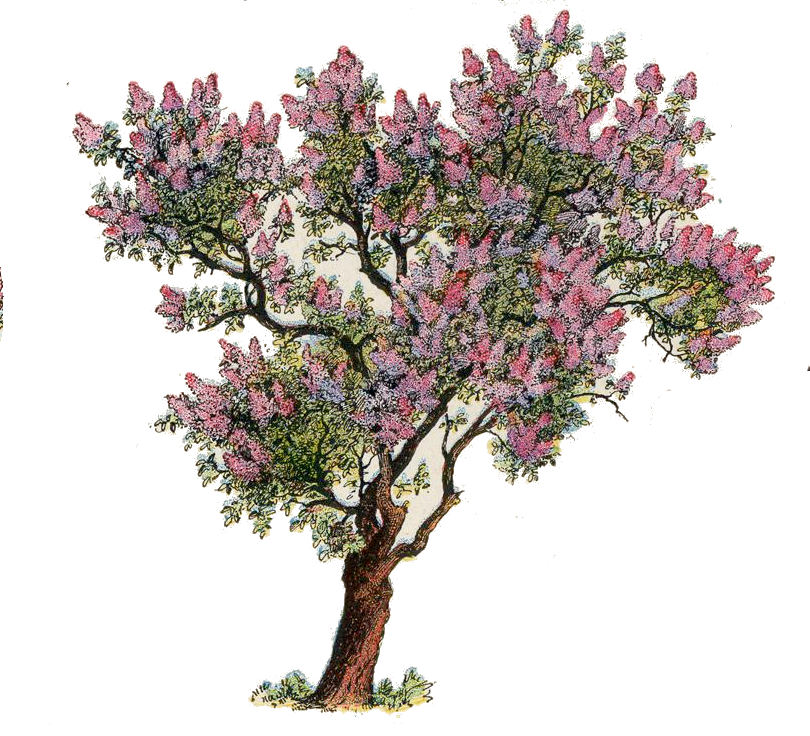
Common lilac
 1
1 1
1 5
5Will it grow where I live?
Common lilac is hardy to zone 5 – that covers all of Central Europe and the British Isles, and every USDA zone from 5 upwards.
Or check it for your location right here:
Profile
- Family
- Oleaceae
- Habit
- Shrub
- Height
- 6 m
- Spread
- 6 m
- Growth
- medium
- Lifespan
- 80 years
- First yield
- after 3 years
- Hardiness
- zone 5–8
- Shade tolerance
- full sun
- Soil
- Sand, Silt, Loam, Clay
- Soil moisture
- semi-dry – very wet
- pH
- 6.6 – 7.6
Uses
Edible: Only the flowers of lilac are edible, and even they are decoration rather than food. Freshly picked individual florets taste floral and perfumed at first and leave a distinctly bitter aftertaste — they are therefore used sparingly, as an edible garnish on desserts, in syrup or candied. The best-known preparation is whole panicles drawn through a batter and fried; the batter softens the bitterness and carries the scent. The flowers also work well for flavouring sugar or in a cold infusion for syrup. Leaves, bark and fruit are bitter and not eaten. For culinary use take flowers only from unsprayed shrubs, and not from roadsides.
Medicinal: The leaves and fruits act against fever, swellings, swellings and worms. Children used to chew the bark or leaves to soothe mouth pains.
Other uses: An essential oil is obtained from the flowers, which is used in perfume production. A green dye is obtained from the flowers. Green and brown dyes can be obtained from the leaves. A yellow-orange dye is obtained from the twigs. The plant is suitable as an informal hedge. It is often used as a rootstock for various ornamental lilac cultivars. Its main drawback is its strong suckering habit.
Growing
Site: Lilac wants sun and a warm, airy position — in shade it grows straggly and barely flowers. Calcareous to neutral soils suit it best and acid ground does not; there, a dressing of lime helps. The decisive question before planting is whether the plant is grafted: own-root shrubs sucker strongly and travel through beds and lawn over the years, while grafted specimens stay put but throw up rootstock suckers that must be removed regularly. For small gardens and beside perennial borders the grafted plant is the quieter choice; for bank stabilisation and informal hedging, the own-root one. It reaches two to six metres in height and as much across — allow the room. The scent is intense; directly beneath a bedroom window some find it too much. Care: Lilac is strikingly undemanding and normally needs no feeding; too much nitrogen comes at the expense of flowering anyway. Pruning decides the following spring: next year's buds are laid down immediately after flowering, so anyone cutting in winter or spring cuts the flowers off. The correct approach is to snap out the spent panicles as soon as they fade and thin old wood at the same time. Exhausted shrubs tolerate hard renewal pruning into old wood and reshoot reliably, but then barely flower for a year or two. The commonest pest is the lilac leaf miner, whose caterpillars mine and roll the leaves; it does the plant little harm, and affected leaves are simply picked off. After a cold wet spring bacterial blight appears — cut affected shoots back into healthy wood.
Propagation
Own-root lilacs supply their own propagation: suckers are cut away with a spade in spring or autumn and planted separately, they almost always establish and flower within two or three years. This is the simplest method and the usual one with old cottage-garden forms. Grafted cultivars cannot be increased this way, because the suckers come from the rootstock and are not true to type. For those, softwood cuttings are taken in May and June, shortly after flowering while the wood is still pliable — they root under film at high humidity, though success varies. Commercial nurseries graft onto seedling rootstocks of the species or onto privet; privet stocks are shorter-lived and the graft union breaks more easily. Seed is pointless for cultivars, since the offspring segregate. To raise the species itself, sow ripe seed outdoors in autumn and leave the stratification to winter.
Value for wildlife
Lilac blossom in May and June is conspicuously popular with butterflies and hawk-moths: the long, narrow corolla tube releases nectar only several millimetres down, which favours long-tongued visitors — red admiral, small tortoiseshell, peacock, and at dusk the hummingbird hawk-moth and privet hawk-moth. For wild bees, by contrast, lilac is of little value; most cannot reach the nectar with their short tongues and find little pollen either. This south-east European newcomer has no specialised species in Central Europe, and as larval food it serves essentially only the introduced lilac leaf miner. The structural value is more solid: old, spreading lilac bushes are dense enough for blackbird, warbler and dunnock nests, and their persistent stems with bark fissures are used by insects. As a nectar source for butterflies it is a gain; as bee forage it is overrated.
Notable
Notable: own-root = strong suckering, grafted = rootstock suckers; flower buds set right after flowering -> prune ONLY after flowering; tolerates renewal pruning into old wood (then 1-2 yrs with little bloom); lime-loving, avoids acid soil; 2-6m high+wide; established neophyte, naturalised on rocky slopes+railway embankments; butterfly nectar plant, overrated as bee forage; used as rootstock for ornamental lilac cultivars;
Origin & habitat
South-eastern Europe: the Balkan Peninsula from central Albania through North Macedonia, Serbia and Bulgaria to northern Romania, with occurrences in northern Greece. Lilac is not native to Central Europe — it arrived in the sixteenth century by way of Vienna from the Ottoman Empire and spread from there across Europe as an ornamental. It has escaped from gardens and cemeteries in many places and persists on rocky slopes, railway embankments, wall tops and old settlement sites; in South Tyrol it climbs to about 1,520 metres. In Germany it counts as an established neophyte capable of displacing native species on warm, dry rocky ground.
Native to rocky hills and open woodlands or scrub in the southern Balkans, mainly occurring on neutral to slightly alkaline soils. It prefers moderately moist, well-drained loamy soils in partly shaded to sunny locations and can be found up to about 1500 meters elevation. In Central Europe, it is commonly naturalized at forest edges, hedgerows, railway embankments, and fallow land.
⚠️ Hazards
Toxicity: toxic
None known
Frequently asked questions
Common lilac: how big does it get?
Common lilac (Syringa vulgaris) grows as a Shrub and reaches roughly 6 m in height when mature, with a spread of about 6 m. Growth is medium.
Common lilac: what site does it need?
Common lilac tolerates full sun. Suitable soils are Sand, Silt, Loam, Clay. Soil moisture should be in the range semi-dry – very wet. The pH may lie between 6.6 and 7.6.
Common lilac: is it hardy?
Common lilac is listed as hardy in zone 5–8 and survives normal winters outdoors there.
Common lilac: will it grow in Central Europe?
Common lilac is hardy to zone 5 – that covers all of Central Europe and the British Isles, and every USDA zone from 5 upwards.
Common lilac: is it poisonous?
Common lilac is classified as toxic. With wild plants, never rely on a database alone — only on a confident identification.
Common lilac: what is it used for?
Rated on a scale up to 10: Edible 1/10, Medicinal 1/10, Other uses 5/10.
Plan this plant into your own garden
Permaplans plans your garden to scale on the map — with a site check, harvest calendar and over 1,000 plants. Free for iPhone, Android, Mac, Windows & Linux.
Will this plant grow where you live? → Check your site
Community experience
No first-hand reports for this plant yet.
Growing it? Write in the app what works for you – your post will show up here.
💬 Get the app and join in