
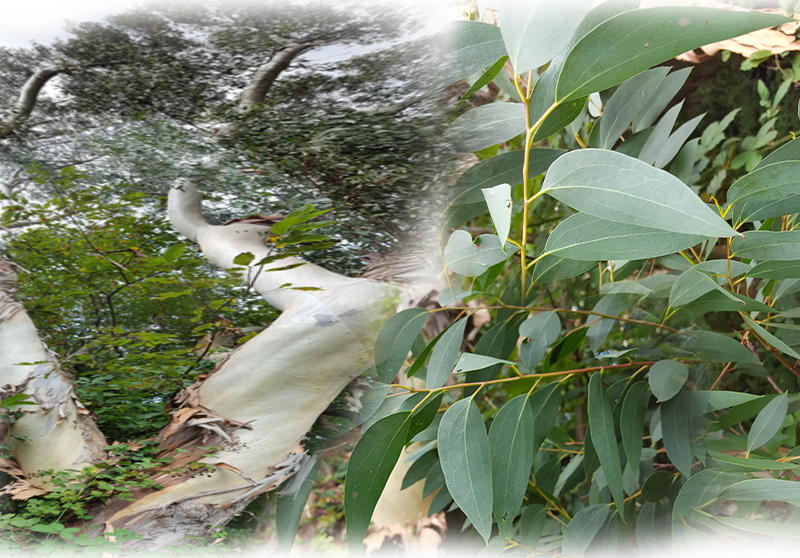
Snow gum
 1
1 5
5 7
7Will it grow where I live?
Snow gum is hardy to zone 7: lowlands, river valleys and cities across Central Europe are fine, harsher continental or upland sites need winter protection or a container.
Or check it for your location right here:
Profile
- Family
- Myrtaceae
- Habit
- Tree
- Height
- 6 m
- Spread
- 4 m
- Growth
- fast
- Lifespan
- 250 years
- First yield
- after 6 years
- Hardiness
- zone 7–9
- Shade tolerance
- full sun
- Soil
- Sand, Silt, Loam
- Soil moisture
- very dry – very moist
- pH
- 6 – 7.5
Flowering & harvest
| J | F | M | A | M | J | J | A | S | O | N | D | |
|---|---|---|---|---|---|---|---|---|---|---|---|---|
| Flowering | ||||||||||||
| Fruit harvest |
Uses
Medicinal: California poppy is a bitter sedative that acts as a diuretic, relieves pain, relaxes spasms, and promotes sweating. The entire plant is harvested during flowering and dried for use in tinctures and infusions. It is taken internally to treat nervous tension, anxiety, insomnia, and incontinence (especially in children). The watery juice is mildly narcotic and has been used to alleviate toothaches. Its effects are similar to opium poppy but much milder, without suppressing the central nervous system. Another report suggests that it has a distinctly different effect on the central nervous system, not being a narcotic but tending to normalize psychological function. It gently acts as an antispasmodic, sedative, and analgesic, making it a valuable herbal medicine for treating physical and mental issues in children. It may also be useful in addressing bedwetting, sleep disorders, nervous tension, and anxiety. An extract of the root is used as a wash on the breasts to suppress milk flow in lactating women.
Other uses: The leaves contain between 0.7 and 0.8% essential oil with antiseptic properties. The plant is tolerant to sea exposure and can be cultivated in coastal areas. The wood is suitable for use as fuel.
Propagation
Sow the seeds in February/March on the surface in a sunny location in a greenhouse. Species originating from high altitudes benefit from a cold stratification of 6-8 weeks at 2°C. Transplant the seedlings into individual pots once the second pair of leaves has developed to ensure good growth. Plant them in their final position in early summer and protect them from cold in the first winter. Seeds can also be sown in June, with the young trees being planted in their final location in late spring of the following year. The seeds have a long shelf life.
Notable
Special features: drought+(sea)wind+tolerant; due to sensitive roots, it should be planted out as early as possible; initially with winter protection; pollarding begins after 3 years of establishment; in temperate climates, Eucalyptus produce less essential oil than in the Mediterranean-tropical regions, but there is less risk of invasion and wildfires here; originating from the high mountains of Australia, it thrives even in Norway.
Origin & habitat
Australia - New South Wales, Victoria.
In central and southern Japan, dense scrub vegetation develops in open areas within forests and humid regions.
⚠️ Hazards
Citronellal, an essential oil found in most eucalyptus species, has been reported as mutagenic when used in isolation. In large quantities, eucalyptus oil, like many essential oils, has led to fatalities due to gastrointestinal irritations. Fatalities have been reported from the ingestion of 4 - 24 ml of essential oils, but also recoveries for the same amount. Symptoms include gastroenteric burns and irritations, nausea, vomiting, diarrhea, oxygen deficiency, weakness, dizziness, lightheadedness, breathing difficulties, delirium, paralysis, seizures, and death, usually due to respiratory failure.
Frequently asked questions
Snow gum: how big does it get?
Snow gum (Eucalyptus niphophila) grows as a Tree and reaches roughly 6 m in height when mature, with a spread of about 4 m. Growth is fast.
Snow gum: what site does it need?
Snow gum tolerates full sun. Suitable soils are Sand, Silt, Loam. Soil moisture should be in the range very dry – very moist. The pH may lie between 6 and 7.5.
Snow gum: is it hardy?
Snow gum is listed as hardy in zone 7–9 and survives normal winters outdoors there.
Snow gum: will it grow in Central Europe?
Snow gum is hardy to zone 7: lowlands, river valleys and cities across Central Europe are fine, harsher continental or upland sites need winter protection or a container.
Snow gum: when does it flower?
In a temperate northern-hemisphere climate it flowers from May to June.
Snow gum: when is it harvested?
In a temperate northern-hemisphere climate the fruit ripens in November.
Snow gum: is it poisonous?
Individual parts of Snow gum are noted as mildly problematic — the plant does not count as poisonous. With wild plants, never rely on a database alone, only on a confident identification.
Snow gum: what is it used for?
Rated on a scale up to 10: Edible 1/10, Medicinal 5/10, Other uses 7/10.
Plan this plant into your own garden
Permaplans plans your garden to scale on the map — with a site check, harvest calendar and over 1,000 plants. Free for iPhone, Android, Mac, Windows & Linux.
Will this plant grow where you live? → Check your site
Community experience
No first-hand reports for this plant yet.
Growing it? Write in the app what works for you – your post will show up here.
💬 Get the app and join in