
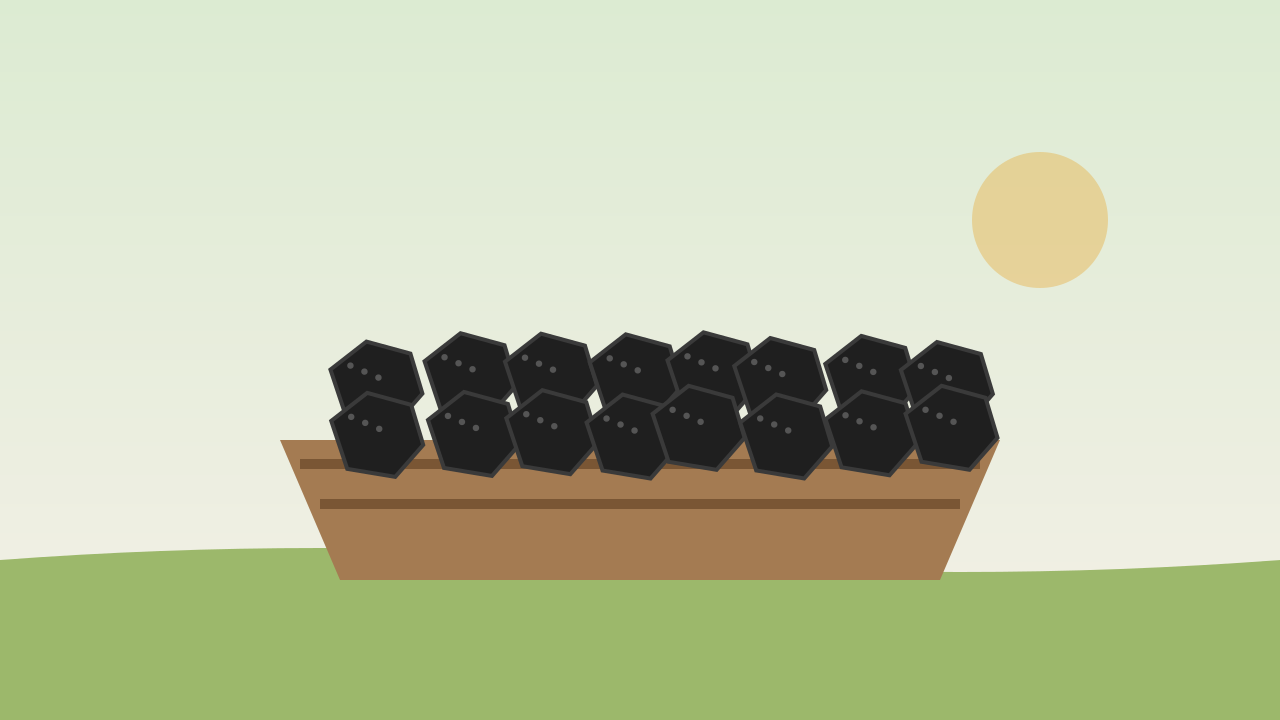
Illustration: Permaplans
Biochar
Wood charred without air: porous, long-lasting and a sponge for water, nutrients and smells.
Biochar is made when wood or other biomass chars at 400–700 °C with little oxygen (pyrolysis). What remains is almost pure carbon with a huge inner surface – one gram can have several hundred square metres.
Why is it useful?
- Storage: the pores hold water and nutrients and release them slowly.
- Habitat: bacteria and fungi settle in it.
- Odour binder: in the compost toilet and the compost.
- Climate: the carbon stays in the soil for centuries.
Important: "charge" fresh char first – in the compost or with urine – or it will pull nutrients out of the soil at the start.
Yield: one cubic metre (stacked) of wood leaves only about 0.25 m³ of char (around 250 litres); the rest burns to heat and gas. A Kon-Tiki kiln does it without any technology.