
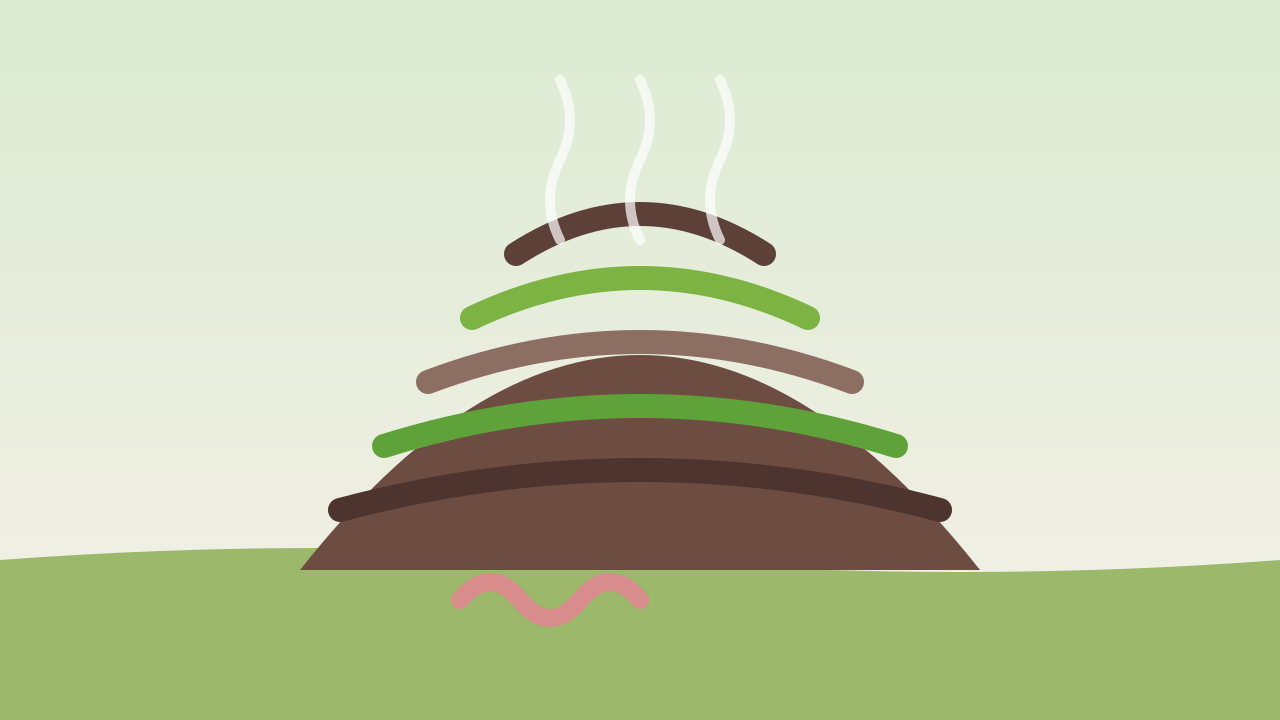
Illustration: Permaplans
Compost
Kitchen and garden waste turns into crumbly, nutrient-rich soil within one or two years.
Compost is controlled decay: bacteria, fungi, woodlice and earthworms break down organic matter until it becomes dark, crumbly compost. It smells of forest soil, holds water and releases nutrients slowly to the plants.
How it works
- Mix: nitrogen-rich "greens" (fruit, vegetables, grass clippings) and carbon-rich "browns" (leaves, wood chips, straw) in the right C/N ratio.
- Air: a loose heap rots, a wet, dense one goes foul. Turning it once lets oxygen in.
- Moisture: like a wrung-out sponge.
- Time: after about a year of rest the compost is ripe.
How much? 200 kg of fresh waste make roughly 100 litres of compost – the rest escapes as water and CO₂. Medium feeders need about 3 litres per m² a year, raked into the surface.
In Garden Survival: whatever cannot be eaten, sold or stored – spoiled food too – goes on the compost. Compost lifts a plant's "soil too poor" penalty for two years.